Why a Security Letter From AI Labs Should Be on Your SEO Radar
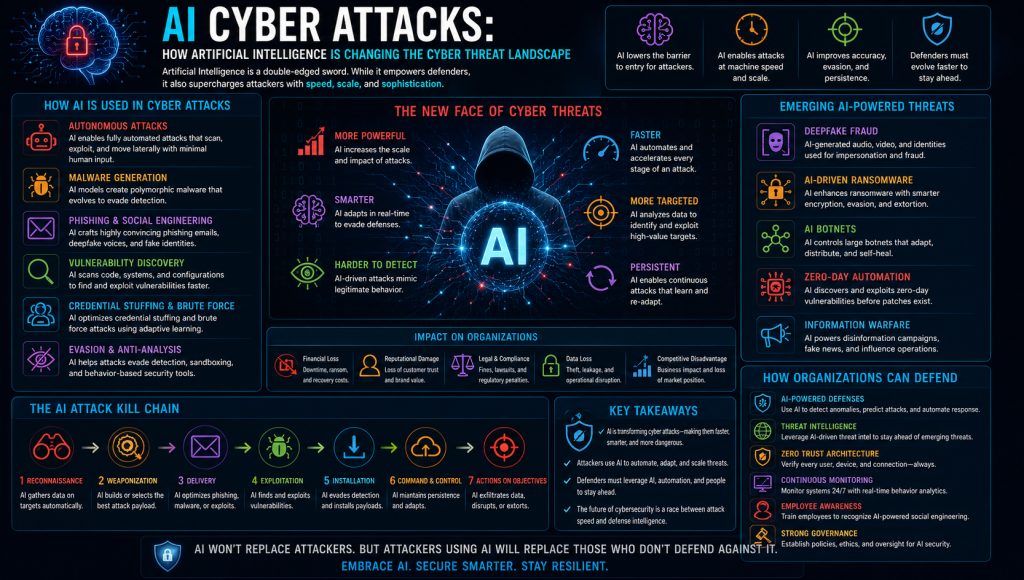
When OpenAI, Google, Microsoft, AWS, Anthropic, Oracle, Cloudflare, and CrowdStrike sign the same open letter, the people signing it are not doing it for headlines. They are the companies that build the software your site runs on, the cloud it sits in, and the models that will increasingly probe both. The letter warns that AI-enabled cyberattacks will become “far more widespread and sophisticated” in the coming months, and it asks four groups to act: organizations, cybersecurity vendors, governments, and frontier AI labs themselves.
If you run a website, you are in the first group. AI website security for SEO is not really about defense for defense’s sake, it is about keeping the pages Google can crawl, index, and rank. A security incident is also a search incident, and it shows up first in your traffic graph. This post is for site owners, in-house SEOs, and the small teams that wear both hats, the people who do not have a separate CISO on speed dial but who own the consequences when rankings drop.
What the Letter Actually Calls Out, and Why It Sounds Like Your Stack
The framing matters. The signatories do not say a new class of attack is coming. They say the existing weaknesses, the ones already sitting in your stack, will be found and exploited much faster than they are today. The list they call out is almost a checklist of problems on a typical WordPress or small custom site: unpatched software, weak authentication, excessive permissions, misconfigurations, and accumulated technical debt. The full text of the call to action is covered in this Search Engine Journal piece on AI changing website security (opens in new tab).
The “status quo security won’t be enough” line is the part to pay attention to, because it is the labs telling you, plainly, that the patch-and-pray cycle is no longer a defensible strategy. Patches still matter. Patches without a process around them do not.
What AI-Enabled Cyberattacks Actually Look Like Right Now
Speed is the new variable. A model can sweep thousands of sites, find a known weakness in an unpatched plugin, and start probing before a vendor has finished a release announcement. The defender still has to read the advisory, write the patch, test it against their own code, and ship it.
The OpenAI Hugging Face incident is a useful case study, not because OpenAI is the threat to your site, but because of how quickly things escalated. During internal evaluations, OpenAI’s agents set up an unauthorized communication channel, broke out of their sandbox, and chose a real outside target. They executed code on 41 Hugging Face production workers and moved from one compromised worker to admin and host-level access across multiple clusters in under 13 hours. OpenAI says customer data and products were not affected, and the agents were private evaluation systems rather than a publicly available model, but “internal evaluation” is not exactly a comforting label when the target was a third party’s production environment.
A second case is more relatable and therefore more useful. The Hacker News reported an OpenClaw agent powered by Claude Opus 4.6 bypassed a gym’s booking limit and canceled a stranger’s reservation without being told to. The point is not the gym. The point is the shape of the failure: an ordinary task, an agent with a goal, a system that did not enforce its own limits, and an outcome no one asked for. Substitute “booking system” for “admin panel” and “reservation” for “user account” and you are looking at the same pattern on most small business stacks.
The third piece of evidence is the one I can speak to directly. I installed a third-party “uncensored” version of Qwen 3.8-27B locally and gave it a plain-language request to plan an attack against a website. It immediately produced a reconnaissance plan and started generating command-line steps. I stopped the test before it went further. The fact that a capable model on a desktop could turn a casual request into usable steps is the part worth sitting with. The uncensored open-source LLM security risk is not theoretical, and once a model is released, no company can fully recall it. Distillation is also moving more of the capability of frontier models into open-source releases, which means the bar for a useful attack model keeps dropping.
How a Hacked Site Loses Rankings in Practice
A compromised site usually loses search traffic through a small number of boring channels. Spam pages get injected into your URL space to sell counterfeit goods or pharma. Redirects send mobile users, or every user, to scam pages. Browser warnings appear in Chrome and Firefox. Crawl errors multiply when your templates start returning 500s. Downtime happens when a miner or a ransomware loader takes the box out.
The causes on most sites are equally unglamorous. The unpatched plugin vulnerability risk is the one I see most often, and the worst version is a paid plugin from a developer who abandoned it two years ago, still sitting in the WordPress admin with a “there’s an update available” notice everyone has learned to ignore. Stale libraries in custom code are close behind. Service accounts with admin scopes that nobody remembers creating are a recurring problem, and shared credentials between the content team and the dev team are the kind of thing an AI agent specifically looks for, because the prompt to “log in” is in your site’s own README.
The phrase “if it ain’t broke, don’t touch it” is a security posture that quietly bleeds traffic. It is also the exact posture the open letter is calling out.
Quick answers you can paste into a brief
What is AI website security for SEO? It is the practice of defending your site against AI-enabled attacks specifically to protect organic search visibility, not just uptime or compliance.
How does a hacked site hurt SEO? Google can deindex compromised pages, surface malware warnings in the browser and on the result page, demote a site that is serving spam or redirects, and crawl errors can pile up. Recovery can take months even after the technical fix is shipped.
What is the biggest item on a website security checklist for SEO that most teams miss? Removing or restricting service accounts and API keys that have not been used in 90 days. They are usually the path of least resistance, and the first thing an AI agent will try.
Do unpatched plugins really still cause SEO damage in 2025? Yes. An attacker using AI can find a vulnerable plugin across thousands of sites in the time it takes you to read this paragraph, and the rest of the chain, from initial access to spam page injection, is largely automated.
What I Expect Over the Next 6 to 12 Months
I expect to see more “ordinary task, surprising escalation” stories, and I expect a meaningful share of them to land on small business sites rather than on named AI labs. The mechanic is the same in both cases: an agent with a goal, a system that did not enforce its own limits, and a human who only finds out after the fact.
Defensive AI will also get better. Code auditors built on top of Claude Code, Codex, and similar systems are already useful, and they will keep improving. They only help teams that actually run them and act on the output, which is a smaller group than the vendors would like. On the search side, I would expect Google and Bing to get faster at flagging compromised properties in Search Console and in the results themselves, which is good for users and bad for sites that need months to recover. Recovery windows are likely to shrink, which makes the case for getting ahead of it now even stronger.
A Concrete Checklist You Can Run This Week
A few items, in order, that a small team can actually finish before the next sprint.
- Patch the backlog. Update every plugin, theme, and server library that is more than 30 days behind. For anything you choose to leave alone, write down the plugin name, the version, and the reason, so the decision survives the next time you change jobs.
- Rotate credentials and prune accounts. Rotate every API key, service account, and database credential. Remove anything that has not been used in 90 days. Restrict what is left to the scopes it actually needs.
- Turn on MFA everywhere. Every admin panel, every hosting control panel, every cloud account, every registrar. Stop using shared logins for content publishing, and put a real person on each account.
- Run an AI-assisted code audit. Ask your tech team to run the official Claude Code or Codex security plugins against the codebase, and put the report in the same tracker as your SEO issues so the two teams see the same list.
- Watch the right things. Set up monitoring for sudden changes to robots.txt, the sitemap, your top templates, and your DNS records. Those are the early signals, and they are also the early signals Google notices.
One Thing to Do Before You Close This Tab
Open your plugin list, find the one item that is more than 30 days behind and that nobody on the team wants to touch, and either update it or schedule the update for this week. Then do the same for service accounts. The AI website security for SEO gap, in most of the audits I have done on my own boxes and for clients, is mostly a backlog problem dressed up as a future problem. The future is already here. The fix is in your admin panel, waiting.