Intro
The Barracuda cloud breach ARTEX incident exposes a specific and growing weakness in how security firms manage their own attack surface. It is not enough to have sophisticated perimeter defenses if the internal plumbing of your cloud environment remains cluttered with stale, unretired credentials. Barracuda, a company that sells network and email security to enterprises, confirmed that an attacker accessed approximately ten of its cloud accounts over a 44-hour window in early November 2026. The intrusion was discovered on November 4, but the access had already been occurring since November 1 and 2. According to BleepingComputer’s report (opens in new tab), the root cause was a cloud access key that Barracuda had provided to a third-party AI vendor for a specific project. When that vendor finished their work, the key was not retired. It sat idle, stored in a public GitHub configuration file, waiting to be found.
The attacker did not use traditional social engineering or complex zero-day exploits to get in. They used a stolen key. More importantly, they leveraged the ARTEX framework, an open-source AI penetration testing tool, to automate their movement once inside. This is where the financial motive becomes clear to the reader who looks at the specific targets. The attacker’s commands focused on cryptocurrency-related secrets, including Ethereum keystore files, private keys, and seed phrases. This suggests the primary goal was direct theft of digital assets, although Barracuda notes they cannot rule out that this was a diversion tactic to obscure the true objective.
For site owners and small business operators, the timeline is the most critical detail here. The attacker had access for nearly two days before detection. In a traditional breach, that window might allow for significant data exfiltration. Here, the speed was not just about the human operator, but about the “machine-speed” automation of ARTEX. The framework allowed the attacker to probe, chain credentials, and move laterally across Barracuda’s data analytics environment, source-code repositories, and Kubernetes clusters with a consistency that traditional alerting systems found difficult to isolate immediately.
Barracuda’s admission that they “did not retire the key when the vendor finished that work” is a stark reminder that security hygiene is often an administrative failure, not a technical one. The key was not broken; it was simply left open. The use of an AI-powered tool to exploit that open door changes the calculus for defenders. You no longer have hours to react to a human moving slowly through your network. You have minutes, or seconds, as the AI agent executes pre-defined hunting routines. The incident serves as a warning that the era of “we will clean up that key next month” is over. If a key is not actively used, it is a liability. The fact that this key was stored in a public repository by the vendor makes the failure even more egregious, as it turned a shared secret into public information the moment the repository was indexed by the attacker’s tools.
Background
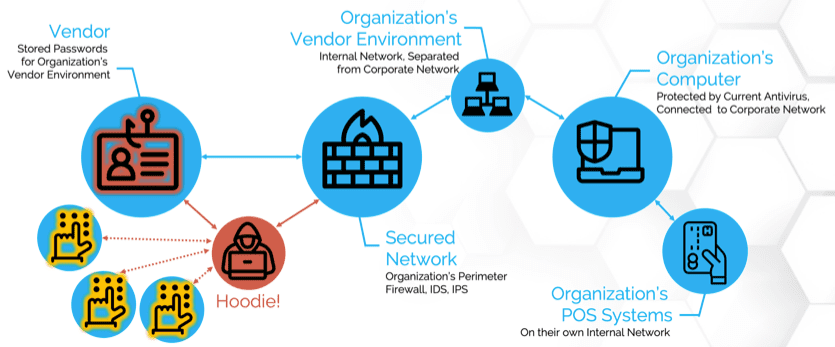
The Barracuda cloud breach ARTEX incident traces back to a specific failure in third-party lifecycle management. Barracuda had previously engaged an AI-focused vendor for a project. As part of that engagement, the vendor was granted a cloud access key. The critical error occurred in the wind-down phase of the relationship. When the project concluded, Barracuda did not revoke the credential. Instead, the key remained active in the cloud environment, functioning as a dormant backdoor. Simultaneously, the vendor stored this key in a configuration file within a public GitHub repository. This combination of factors created a perfect storm: a valid credential with broad access rights, accessible to anyone with internet access, including automated scanning tools.
ARTEX is an open-source framework designed for AI-powered cloud attacks. It automates the entire process of reconnaissance, exploitation, and post-exploitation. In this case, the attacker likely obtained the specific key in October, either by scraping the public repository or through other means of theft from the vendor. Once the key was in hand, the attacker deployed ARTEX to execute the intrusion. The framework operates at “machine speed,” meaning it can probe endpoints, identify valid credentials, and chain those credentials to access adjacent systems far faster than a human operator.
The attack path followed a logical progression through Barracuda’s infrastructure. The initial entry point was the cloud access key itself. From there, the attacker moved into the data analytics environment. This is a common target for financial theft because it often aggregates sensitive data or contains references to other systems. The actor then proceeded to access source-code repositories, which likely contained more hardcoded secrets or CI/CD pipeline credentials. Finally, the intrusion extended into Kubernetes clusters. This lateral movement demonstrates the concept of credential chaining, where the compromise of one system provides the keys to the next.
A concrete analogy helps here. Think of a house with a lock that uses a specific key. If you give that key to a handyman for a one-time repair and then forget to change the locks, the key remains valid. Now, imagine the handyman wrote that key’s number on a sticky note and left it on your front door for the world to see. A burglar does not need to pick the lock. They just read the note, walk in, and then use the layout of the house to find the safe in the basement. The Burgar’s speed matters less than the fact that the key was both valid and publicly documented.
Barracuda’s own admission in the BleepingComputer report (opens in new tab) that “that is on us” reflects the reality of modern cloud operations. Vendor credential management is often an afterthought. Keys are issued for convenience, not security. When those keys outlive their purpose, they become liabilities. The use of an AI tool to exploit this specific hygiene gap compresses the detection window significantly. What might have taken a human attacker days to explore manually, ARTEX did in hours. This highlights that the defense perimeter is no longer just the firewall or the perimeter network. It is the entire web of temporary credentials and their storage locations. If a vendor’s GitHub repo is part of your attack surface, it needs to be treated with the same scrutiny as your own production environments.
What is Credential Chaining?
Credential chaining is the technique of using valid credentials discovered in one compromised system to gain unauthorized access to adjacent, more sensitive systems. It is less about breaking new encryption and more about following the existing, authorized paths that administrators or developers have already laid out. The attacker does not need to exploit a zero-day vulnerability in the next system. They simply present the stolen identity token, API key, or service account certificate, and the target system accepts it because it is technically valid. The security boundary fails not because the lock is broken, but because the key was still in the holder.
In the Barracuda case, the chain started with the third-party vendor’s GitHub configuration file. Once the attacker held that cloud access key, they entered Barracuda’s data analytics environment. From there, they did not stop. They used the access rights granted within that analytics environment to reach source-code repositories and Kubernetes clusters. Each step relied on the trust relationship already established in the previous step. The attacker moved laterally across the infrastructure, treating the company’s own integration architecture as a map. The specific target was the system storing customer integration credentials for Barracuda XDR. While the attackers reached that system, Barracuda confirmed there was no evidence those specific customer credentials were accessed or stolen. Still, the proximity to that data store was enough to trigger a precautionary revocation request for potentially affected Managed XDR customers.
Detection of this specific pattern was aided by the automated nature of the intrusion. Security teams identified the ARTEX signature through specific machine-style labels and built-in hunting routines. The tools left traces that looked distinct from human-driven attacks, such as uniform probing intervals and predictable naming conventions in created resources. This allowed the incident response team to distinguish between legitimate administrative activity and the automated sweep performed by the framework. The technique itself is not new. Credential chaining has been the core mechanism of ransomware lateral movement for years. What has changed is the speed and the scale. AI-driven tools like ARTEX can execute these chaining steps in seconds, moving from initial access to deep infrastructure exploration before human analysts even open a ticket. The defense against credential chaining requires breaking the chain. If the initial key is retired, the entire path collapses. If the next system does not accept the initial credential, the movement stops. The incident shows that modern cloud security is less about perimeter defense and more about strict credential isolation and rapid revocation capabilities.
What’s happening now
The immediate operational response from Barracuda focused on risk containment and customer transparency. The company confirmed that while the threat actor reached a system housing customer integration credentials for its Managed XDR product, there is no evidence that those specific secrets were accessed or exfiltrated. However, the mere proximity of the intrusion to that data store was sufficient to trigger a precautionary directive. Barracuda asked potentially affected customers of its Managed XDR Cloud and Monitored Endpoint services to revoke and recreate their integration credentials. This is a standard but critical step in incident response. When an attacker has demonstrated the ability to traverse a specific network segment, assuming innocence of that segment is a security failure. It is better to force a rotation and absorb the administrative friction than to risk a silent compromise of customer data.
For customers who did not receive direct communication regarding this incident, the situation is different. Barracuda explicitly stated that these users do not need to take further action. This distinction matters because it limits the scope of the operational burden to only those accounts where the threat actor’s path of least resistance intersected with sensitive customer data. For the broader user base, the incident remains a monitored risk rather than an active threat requiring immediate manual intervention.
The company’s public statement also included a clear admission of responsibility regarding the root cause. Barracuda acknowledged that the initial access vector was a cloud access key granted to a third-party AI vendor for a previous project, which was not retired when that engagement concluded. The key was stored in a configuration file within the vendor’s public GitHub repository. This detail is crucial because it shifts the blame from a sophisticated zero-day exploit to a basic hygiene failure. The breach Barracuda links cloud breach to ARTEX AI-powered cyberattack (opens in new tab) highlights that even major security firms can miss stale credentials in their own supply chain. The attacker stole the key in October, but the damage occurred in November, indicating that the window between theft and exploitation can be significant if the credential remains valid and accessible.
There is a secondary angle worth noting. Barracuda observed that the attacker attempted to establish persistence by deploying a container that mounted the host’s file system, including credentials stored on it. A separate attempt to create a new cloud administrator identity was blocked. This suggests the threat actor was not just looking for quick data exfiltration but was trying to secure long-term access for potential future operations or a diversionary attack. The company did not rule out that the financial motivation, indicated by the targeting of cryptocurrency secrets, might have been a smokescreen for other objectives. This duality in motive complicates the post-incident assessment. Is the threat actor a pure financial thief, or are they laying groundwork for a more damaging future intrusion? The answer requires continuous monitoring of the compromised accounts, which is what Barracuda is currently doing.
From a practical standpoint, the focus now is on verifying that all temporary credentials have been fully purged from the environment. It is not enough to revoke the stolen key. Any derived credentials, session tokens, or API keys that were generated using the original access point must be invalidated. This is a common oversight in cloud incident response. Teams often revocate the primary identity but forget the downstream artifacts. As the investigation continues, the priority will be determining if any data analytics pipelines or source-code repositories were modified in ways that could have introduced malicious code or logic bombs into Barracuda’s development environment. This phase of the response is quieter and more protracted than the initial containment, but it is where the real assurance of safety is built.
What it means in practice
The failure here is not complex, which makes it harder to explain to a security board. It is a classic cloud access key rotation miss where a temporary vendor credential became a permanent security liability. Barracuda’s own admission that they did not retire the key when the AI vendor finished the work is a stark reminder that manual cleanup processes rarely survive contact with busy project timelines. The key was not just left active; it was stored in a configuration file within the vendor’s public GitHub repository. This is a critical hygiene error that any automated tool can exploit instantly. Think of it like a contractor fixing your kitchen plumbing who leaves a spare key under the mat instead of taking it back. When that key is visible to everyone, the front door is as good as open.
The role of vendor credential management in this scenario is often treated as a compliance checkbox rather than an operational risk. Many organizations assume that because a third party has finished a project, the relationship is closed. They do not audit the digital footprints left behind. Storing secrets in public repositories is a fundamental mistake, but the speed at which an AI-driven agent can find and chain that secret changes the risk profile entirely. The attacker did not need to break into Barracuda’s perimeter; they just needed to find a loose thread left behind by a previous project.
Consider the threat landscape shifting toward AI-powered cloud attacks. The use of ARTEX reduces the time between initial access and lateral movement, compressing the defense window significantly. In a traditional breach, a human operator might take days to map out an environment and try credentials. An automated framework can probe hundreds of systems in minutes. This compression forces defenders to rely on automated detection and response, because human reaction times will not keep up with machine speed. The Barracuda security incident illustrates that even a well-resourced security company can be compromised through a mundane operational gap in their supply chain. The gap was not in the firewall or the identity provider; it was in the process of offboarding a vendor.
I expect we will see more incidents where third-party access leads to internal breaches as these AI penetration testing tools become more accessible. The cost of entry for these automated attacks is dropping, meaning more small groups or lone actors will have the capability to execute this kind of credential chaining attack. Regulatory bodies are already looking at credential lifecycle management, and this incident will likely prompt stricter standards for verifying the disposal of third-party access keys. Organizations need to move from trusting vendors to verify their cleanup. You cannot assume a partner will handle their own credentials responsibly if they are sitting in a public repo.
For site owners and developers, the lesson is clear: your supply chain is your perimeter. If a contractor or API provider leaves access keys in your shared environments, you are responsible for revoking them. Do not wait for the next breach. Treat every vendor handoff as a security event that requires a formal key audit. The days of “we will clean up the keys later” are over, because “later” is now measured in seconds, not days.
What to expect next
The immediate aftermath of this breach involves a shift from reactive containment to proactive verification. Barracuda has already asked potentially affected Managed XDR Cloud and Monitored Endpoint customers to revoke and recreate their integration credentials as a precaution. This step is standard, but the scale of the request is telling. It signals that the attacker’s reach into the system storing customer integration credentials was close enough to warrant assumption of breach, even if no exfiltration was confirmed. For customers who did not receive direct communications, the instruction to take no further action provides a clear line, but only temporarily. As the investigation deepens, more entities may fall into the “potentially affected” bucket.
I expect regulatory scrutiny to intensify around vendor supply chain security in the coming year. The Barracuda cloud breach ARTEX incident fits a pattern where third-party access becomes the primary vector for internal compromise. Agencies are already drafting stricter standards for credential lifecycle management, and this event will likely accelerate that process. The specific failure here, a key stored in a public GitHub repository by a vendor, is not new. It is a known hygiene error. The new variable is the speed at which AI tools like ARTEX exploit that error. Before these tools, the window between key exposure and exploitation might have been weeks or months. Now, it is measured in hours.
We should also anticipate continued and more aggressive use of ARTEX and similar frameworks against other major organizations. The tool is already involved in attacks against hundreds of organizations, including recent incidents at Railway and WorkOS. This is not an isolated tool; it is a trend. Automated cloud intrusions that rely on credential chaining will become the default for financially motivated threat actors. The financial motive in this case, targeting Ethereum keystore files and seed phrases, suggests a direct theft of digital assets. We will likely see more attacks that combine traditional ransomware techniques with the precision of machine-speed lateral movement.
For defenders, the expectation must be that the defense window is compressing. You cannot rely on human analysts to catch up with AI-driven probing. The detection methods Barracuda used, specific machine-style labels and built-in hunting routines, will become less distinctive as ARTEX evolves. The labels will change, but the underlying behavior of rapid credential exploration will remain. I do not know how long it will take for the security community to develop signatures that keep pace with the tool’s updates. What I do know is that the cost of entry for these attacks is dropping, and the volume will increase.
Expect more disclosure notices from companies that used the same offboarding process Barracuda described. The root cause, a failed key retirement during vendor offboarding, is a common operational gap. Until organizations move from trusting vendors to verifying their cleanup, these incidents will continue. The next breach may not involve AI tools, but it will almost certainly involve the same fundamental failure: a credential that should have been dead but was left alive in a public place. The bar for acceptable risk is dropping fast.
A Concrete Next Step
You do not need a dedicated incident response team to address the root cause here. You need an afternoon and root access to your cloud console. The Barracuda incident was not sophisticated; it was administrative. The key was not hidden in a shadow IT server or exfiltrated through a zero-day exploit. It sat in a configuration file on a public GitHub repository because nobody checked when the project ended. This is the failure mode that keeps happening in my own hosting environment, and it is the one you can fix today.
Start by listing every active Access Key ID in your IAM users and roles. Do not trust your memory or your documentation. Query the API directly. For AWS, that means running aws iam list-access-keys for every user and role that has console access. For GCP, it is gcloud iam service-accounts list followed by checking their keys. You are looking for age. Any key older than 90 days that belongs to a vendor or contractor is a candidate for immediate revocation. Do not wait for a formal audit. If you do not know who created that key or what it was for, revoke it. You can always reissue it in five minutes. You cannot un-rotate a stolen credential.
Next, search your repositories. This is where the Barracuda breach actually started. Use a tool like TruffleHog or Gitleaks. If you have never run them on your private repos, that is a problem. Scan for strings that look like AWS Access Keys, GCP Service Account JSONs, or OCI keys. In my business, I have found hardcoded AWS keys in old Terraform state files and .env backups that were committed years ago and forgotten. One specific check I recommend: search your public GitHub organizations for the pattern aws_secret_access_key. It should return zero results. If it returns anything, treat it as compromised immediately. Rotate the key, then investigate how it got there.
Finally, implement automated rotation. You can set an Expiration policy on IAM keys in AWS, forcing them to rotate every 30 or 60 days. This is not a recommendation; it is a control that removes the human memory burden. For GCP, use Short-Lived Credentials where possible, or enforce a strict maximum lifetime on API keys. If you are running a VPS hosting business, this means every customer’s API token should have a hard expiry. The default is often indefinite, which is a liability you are carrying on behalf of your users.
The goal is to make the attack surface shrink automatically. When a vendor walks away, their key should die without you having to remember to go into the console and click a button. If you do this, the next ARTEX-driven scan of your infrastructure will find expired credentials and a closed door, not an open path to your Kubernetes clusters. That is the entire defense.