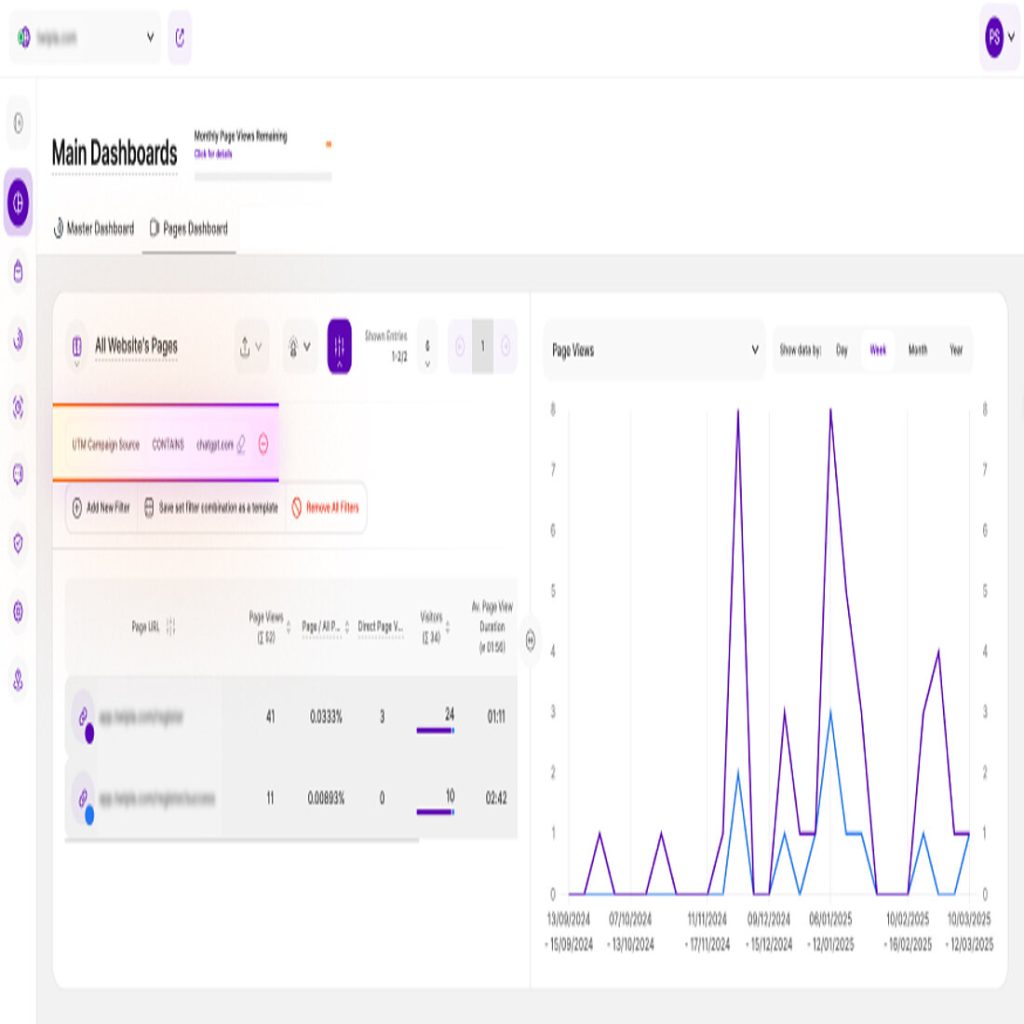
Intro
If your GA4 property showed ChatGPT referral sessions falling to near zero in the second week of October, the traffic probably did not disappear. The most likely cause was a chatgpt referral traffic missing utm tag problem: inline links in ChatGPT answers stopped carrying the utm_source=chatgpt.com parameter after GPT-6 rolled out. Those visits still arrived, but GA4 credited them to Direct instead of the AI assistant channel.
I have dealt with broken campaign tagging enough times to recognise the shape of this. The numbers drop, someone asks why the content stopped working, and the fix turns out to be a parameter that went missing upstream. In this case, Graphite CEO Ethan Smith reported an approximate 45% drop in ChatGPT sessions across sites with meaningful AI Assistant Channel traffic in GA4. Adobe’s Cedric Huesler said OpenAI confirmed a known bug to him on October 14, and that a fix started deploying on October 15. By around 9 a.m. PT that day, tagged ChatGPT clicks had returned to roughly 95-100% of the same hour from the previous week across thousands of sites he tracks. SEO consultant Glenn Gabe replied that he had not seen the change yet, and OpenAI’s release notes did not mention the bug or the fix. That gap between vendor confirmation and public documentation is normal enough, but it means you should verify your own data rather than assume the fix reached every property.
Think of it as a shop that loses its door sign for a week. Customers keep walking in, but your footfall counter logs them as passerby because the sensor no longer reads the label. The traffic was real. The attribution was wrong.
The Search Engine Journal pulse piece has the timeline and the analyst quotes: Rank Tracker Data, ChatGPT Tags & AI Search Links, SEO Pulse (opens in new tab).
This intro sets up the rest: why the missing tag matters beyond one bad report, how to separate real losses from tracking losses, and what to do before you tell a client that ChatGPT traffic collapsed.
Background
ChatGPT referrals were never hard to spot in GA4 until they were. When OpenAI started including inline links in ChatGPT answers, those links carried a UTM parameter: utm_source=chatgpt.com. That tag is what told GA4 to file the session under the ChatGPT referral channel. Without it, the session looks like someone typed your URL directly or came from an unknown source, and GA4 does the only thing it can do with a visit that has no referrer and no campaign parameters. It drops it into Direct.
Sometime around October 8, that tag stopped appearing on inline links after GPT-6 rolled out. The change was not announced. It was noticed when analysts compared week-over-week traffic. Graphite CEO Ethan Smith wrote on LinkedIn that sites with meaningful AI Assistant Channel traffic in GA4 saw an approximate 45% drop in ChatGPT sessions. Adobe’s Cedric Huesler added that OpenAI confirmed a known bug to him on October 14, and that a fix started deploying on October 15. By roughly 9 a.m. PT that day, tagged ChatGPT clicks had returned to about 95-100% of the same hour from the previous week across thousands of sites he tracks. SEO consultant Glenn Gabe replied that he had not seen the change yet, and OpenAI’s release notes did not mention the bug or the fix. You can read the full timeline in the Search Engine Journal pulse piece (opens in new tab).
Here is a worked example that any site owner will recognise. Suppose your site normally gets 1,000 sessions per week from ChatGPT, all tagged. One week you see only 550 in the ChatGPT channel and a 450-session bump in Direct. The total traffic is roughly the same. You have not lost visitors. You have lost the label that told you where they came from. That is the chatgpt referral traffic missing utm tag problem in a nutshell. I have had to explain this to clients who were ready to rewrite their entire content strategy because a single GA4 line item dropped. The fix is not more content. The fix is checking whether the tag is present before you panic.
I expect this will not be the last time an AI platform changes its link format without warning. As ChatGPT, Google’s AI Overviews, and Bing’s AI answers keep experimenting with inline citations and carousels, tracking parameters will come and go. Building a dashboard that relies on a single UTM tag is fragile. You need a fallback: compare total traffic, check server logs for ChatGPT’s user agent, and look at direct traffic spikes that coincide with known AI referral drops. That way you catch the next missing tag before it ruins your monthly report.
Intro
If you opened GA4 this month and saw your ChatGPT referral traffic cut in half, you are not alone. The chatgpt referral traffic missing utm tag issue has become one of the most common reporting headaches for site owners since early October. The short version: ChatGPT stopped appending utm_source=chatgpt.com to some of its inline links, so sessions that used to land in the “ChatGPT” channel started showing up under “Direct” instead. The traffic did not disappear. The label did.
I have seen this pattern before with other platforms that change their link formats without warning. A client once spent two days rewriting meta descriptions because their “organic search” line dropped by 30% in a single afternoon. Turned out a browser update had started stripping a tracking parameter from the referrer string. The visitors were still arriving. The attribution just broke. This ChatGPT situation is the same story with a different logo.
The timeline matters. According to the Search Engine Journal pulse report (opens in new tab), Ethan Smith from Graphite first flagged an approximate 45% drop in ChatGPT sessions across sites with meaningful AI Assistant traffic. Cedric Huesler from Adobe later confirmed that OpenAI acknowledged a known bug on October 14 and began deploying a fix the next day. By the morning of October 15, tagged clicks had returned to roughly 95-100% of the previous week’s volume across thousands of sites. Not everyone saw the fix immediately. SEO consultant Glenn Gabe replied that he had not seen the change yet, and OpenAI’s release notes did not mention the bug or the fix.
Here is a worked example that any site owner will recognise. Suppose your site normally gets 1,000 sessions per week from ChatGPT, all tagged. One week you see only 550 in the ChatGPT channel and a 450-session bump in Direct. The total traffic is roughly the same. You have not lost visitors. You have lost the label that told you where they came from. That is the chatgpt referral traffic missing utm tag problem in a nutshell. I have had to explain this to clients who were ready to rewrite their entire content strategy because a single GA4 line item dropped. The fix is not more content. The fix is checking whether the tag is present before you panic.
I expect this will not be the last time an AI platform changes its link format without warning. As ChatGPT, Google’s AI Overviews, and Bing’s AI answers keep experimenting with inline citations and carousels, tracking parameters will come and go. Building a dashboard that relies on a single UTM tag is fragile. You need a fallback: compare total traffic, check server logs for ChatGPT’s user agent, and look at direct traffic spikes that coincide with known AI referral drops. That way you catch the next missing tag before it ruins your monthly report.
Background: chatgpt referral traffic missing utm tag
To understand why a missing tag causes such confusion, you need to know how GA4 decides where a session came from. When someone clicks a link from ChatGPT to your site, the URL can carry a query string like ?utm_source=chatgpt.com. That parameter is a UTM tag, and GA4 treats it as a manual override. It ignores the HTTP referrer and files the session under the source you specified. For years, ChatGPT appended that exact tag to outbound links in its answers. It was the only reliable way to identify AI referral traffic because most chat applications strip the referrer header for privacy or technical reasons. Without the tag, GA4 falls back to the referrer. When the referrer is empty, the session lands in Direct.
The GPT-6 rollout changed the link format. Inline links in ChatGPT answers stopped carrying the utm_source=chatgpt.com tag. The sessions still arrived, but they arrived naked. GA4 had no signal to attribute them to ChatGPT, so it dumped them into Direct alongside bookmarked visits, typed URLs, and traffic from apps that never pass a referrer. This is not a new behavior. Email clients and native mobile apps have been hiding referrers for years. What made this different was the volume. ChatGPT sends enough traffic to some sites that a sudden 45% drop in the ChatGPT channel becomes impossible to ignore. Search Engine Journal covered the story with data from Graphite and Adobe, and the pattern was consistent: the chatgpt referral traffic missing utm tag problem looked like a traffic collapse but was actually a labeling failure.
The practical test is simple. Copy a link from a ChatGPT answer and paste it into a text editor. Look for utm_source=chatgpt.com at the end. If it is missing, you have found the cause of your GA4 anomaly. You can also check your server logs for requests from ChatGPT’s user agent, though that requires more setup. The key point is that the tag is a fragile identifier. It depends on the platform appending it correctly every time. When that breaks, your analytics breaks with it, and the chatgpt referral traffic missing utm tag issue becomes a lesson in relying on a single tracking parameter.
What’s happening now
The tag bug is mostly fixed, but the fix arrived quietly. OpenAI confirmed the issue to Adobe’s Cedric Huesler on October 14, and by 9 a.m. PT on October 15, tagged ChatGPT clicks had returned to roughly 95-100% of the same hour from the previous week across thousands of sites Huesler tracks. That is a fast recovery, but it was not universal. SEO consultant Glenn Gabe replied that he had not seen the change yet, and OpenAI’s release notes, updated on October 15, made no mention of the bug or the fix. If you were staring at a flat ChatGPT line in GA4 that morning, you were not alone, and you were not necessarily wrong to wait.
The bigger problem is that this happened against a backdrop of unusual search result volatility. Nozzle, a rank tracking company, collected 17.8 million Google results pages through automated searches between September 13 and October 9. About 8.0% of those pages were missing most of the keyword’s usual sites, compared with 0.17% in the August 20 to September 9 baseline. The share peaked at roughly a quarter of pages from September 27 to 29 and has been running at 5% to 11% a day since October 1. Nozzle calls these pages “poisoned” and attributes the pattern to Google’s response to AI scraping, though Google has not commented. For site owners, this means a sudden ranking drop might not be a real drop at all. The page you are checking may be one of the poisoned ones, and the usual sites may come back on a later check.
So the current situation is two overlapping problems that look similar in a dashboard. The ChatGPT referral tag issue was a labeling failure that made real traffic look like Direct. The rank tracker anomalies are a visibility failure that makes real rankings look like losses. Both create false alarms. And because neither was clearly announced by the platforms involved, you have to verify each one manually. That is the part I find frustrating: the data you rely on for diagnosis can be the thing that is broken.
What it means in practice: chatgpt referral traffic missing utm tag
The first practical consequence is that your Direct traffic number becomes a junk drawer. When ChatGPT links stopped carrying utm_source=chatgpt.com, those sessions did not disappear from GA4. They arrived without a source label and fell into Direct. A site owner I know runs a small documentation site with one troubleshooting page that a popular AI answer cites. Last month that page received about 1,400 sessions from ChatGPT over a week. This month the ChatGPT line dropped to 180, while Direct rose by roughly 1,100 in the same week. The page did not become less useful, and the AI answer did not stop linking to it. The tag simply stopped arriving. If you pulled a monthly report without checking the tag window, you would conclude the page lost most of its AI traffic and probably rewrite content that was working fine.
The analogy I keep coming back to is a delivery van with a broken barcode scanner. The parcels still arrive at the door, but the scanner stops logging them. Inventory says zero while the shelf is full. You would not reorder stock based on the scanner alone, and you should not rewrite a page because one channel line in GA4 looks flat.
In practice, annotate GA4 for October 8 through 15 so nobody reads that week as a real decline. Then look at Direct sessions for landing pages you know AI answers cite. Check whether those Direct sessions rose while ChatGPT sessions fell. Compare against server logs if you have them, though many ChatGPT clicks arrive without a referrer at all, which is why the UTM tag matters so much. Cedric Huesler recommended tracking by UTM tag for exactly that reason, and the SEJ Pulse roundup (opens in new tab) places the affected window between October 8 and 15.
My expectation is that this will happen again. AI answer formats change quickly, and a single front-end release can drop a parameter without anyone calling it a bug. I would not build a dashboard that assumes ChatGPT referrals arrive tagged every time. Treat the tag as a lower bound on AI traffic, not a census, and keep a note in your reporting template so the next flat line does not trigger a panic.
What to expect next
The fix that landed on October 15 probably holds for now. OpenAI confirmed the bug to Cedric Huesler and started deploying a correction, and by that morning tagged clicks were back to roughly 95-100% of the previous week’s same hour across thousands of sites he tracks. But the release notes never mentioned the bug or the fix, which tells you something about how quietly these things move. I do not expect OpenAI to publish a changelog entry the next time a parameter gets dropped. The tag will break again, likely during a model update or a front-end change that has nothing to do with analytics, and the first sign will be another flat line in GA4.
Google’s changes to AI Overviews and AI Mode links are worth watching for a different reason. Moving inline links higher in a response does not change the position reported in Search Console, because every link in an AI Overview gets the same position as the overall overview. So if you see a rank tracker showing your page at position one for an AI Overview query, that number is not telling you where your link sits inside the answer. It is telling you the overview appeared. I expect more site owners to misread that as a ranking gain when the actual click-through rate might not move at all.
Bing’s new Topics Portfolio in the AI Performance report is directional, not exact. Microsoft says as much. It groups queries into broader topics and shows approximate citation volumes, which is useful for spotting coverage gaps but not for building a precise dashboard. The opportunity queries list can include competitor brand terms that have nothing to do with your site, so treat it as a starting point for content planning, not a to-do list.
The rank tracker anomalies Nozzle documented, where 8% of Google results pages were missing most of a keyword’s usual sites between September 13 and October 9, are probably not going away. Nozzle attributes the pattern to Google’s response to AI scraping, and Google has not commented. I expect more of these poisoned pages during future scraping crackdowns. If you see a one-day drop in late September or October, check Search Console impressions and clicks for the same query before you panic. A real decline shows up in both places. A tracker glitch usually does not.
Next steps
The most useful thing you can do this week is separate a real traffic drop from a tracking artifact. Start with GA4. Open the Traffic Acquisition report and set the date range to October 8 through October 15. Add a secondary dimension for Session source. Filter for sessions where the source is exactly “direct” and the landing page matches a URL that historically received ChatGPT referrals. If you see a spike in direct sessions on those pages during that week, and the spike disappears after October 15, you have found the missing UTM tag problem in your own data. No third-party tool required.
Next, check your server logs for requests with a user agent containing “ChatGPT-User” or “GPTBot” (though note that GPTBot is for training, not user clicks). The actual click user agent might be different, but you can look for referrer headers that are empty or contain “chatgpt.com” without the utm parameter. That confirms the tag was stripped before the request hit your analytics.
Once you have confirmation, update your reporting notes. If you use a custom channel grouping in GA4, create a rule that catches sessions with a landing page containing “utm_source=chatgpt.com” (if the tag returns) and also a fallback rule for direct sessions on pages that historically got ChatGPT traffic. That way your dashboards do not show a fake collapse every time OpenAI ships a bug fix.
For your own site, add a UTM parameter to any outbound links you control that point to your content from ChatGPT or other AI assistants. You cannot control OpenAI’s inline links, but you can control links in your own prompts and shared conversations.
Finally, the one action I would take today: open GA4, run that October 8 to 15 comparison, and screenshot it. Save the screenshot next to your October traffic report so that when someone asks why ChatGPT sessions fell, you can show them the direct traffic spike instead of a panic email.