Intro
There is a growing assumption in developer communities that every modern coding agent workflow requires dedicated Model Context Protocol servers to function properly. Look at any recent configuration guide or repository setup, and you will see instructions for spinning up background processes, wiring up local transport layers, and managing external nodes just to let an AI assistant read a local file or check a database query. We have taken the standard client-server model and applied it to AI tools with religious fervor.
The gap between how we configure these protocols in theory and how busy developers actually wire up tools on production machines is wide. If you are managing your own VPS infrastructure, running Docker containers, and juggling cPanel accounts for clients, adding another persistent background process just to help an assistant parse a log file feels like overkill. We build elaborate test environments and validation pipelines for our core applications, yet we throw together ad-hoc service wrappers for our agent tooling without thinking about the operational cost.
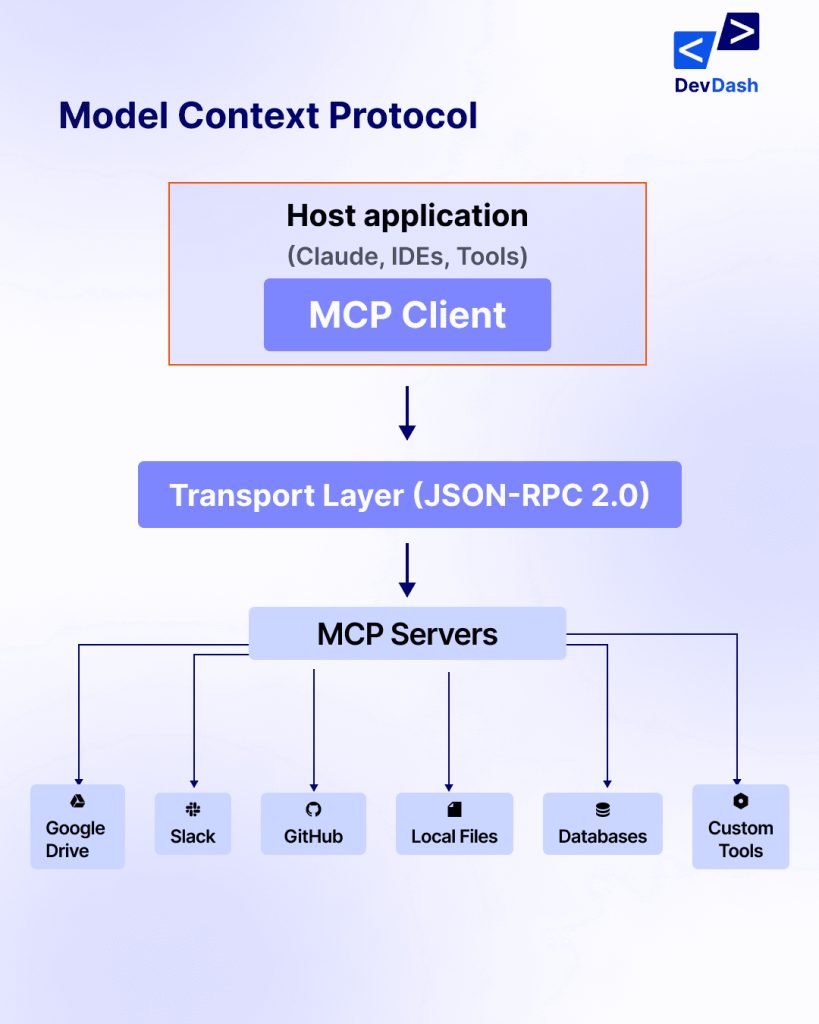
This raises the core question of whether Model Context Protocol servers solve a real operational bottleneck or just add another layer of abstraction. As Kaan Bobaç explores in Do AI Agents Really Need MCP Servers? (opens in new tab), the architecture introduces a distinct sequence of discovery and execution steps that separate the agent host from the underlying tools. When you trace the communication path from your initial prompt down to an external API call, every extra protocol boundary is another place where things can break silently at three in the morning. We need to look past the hype of standalone tool servers and evaluate whether native function calling or direct script execution does the job with fewer moving parts on our boxes.
{
“name”: “get_export_status”,
“description”: “Read the status of a CSV export by its ID.”,
“inputSchema”: {
“type”: “object”,
“properties”: {
“export_id”: { “type”: “string” }
},
“required”: [“export_id”]
}
}
What’s Happening Now with Model Context Protocol Servers
The current ecosystem is obsessed with wrapping every existing API, database query, and shell script into a standalone Model Context Protocol server. Developers are spinning up separate node processes and Python daemons just to let an editor extension read a local directory or check the status of a staging deployment. If you maintain servers for a living, this pattern looks suspiciously like the early days of microservices, where we multiplied our failure points before we even solved our deployment problems. Every single wrapper runs as its own background daemon, consuming memory, spawning child processes, and demanding its own set of environment variables.
When you manage a VPS with limited RAM, adding three or four background services just to support a coding assistant introduces real overhead. You now have multiple persistent connections communicating over standard input and output streams, or sometimes via local sockets and HTTP. If one of those wrapper processes crashes or hangs during a long-running task, the agent loses its capability entirely, often failing with a cryptic timeout error instead of recovering gracefully. Debugging these issues requires tracing logs across multiple detached processes while trying to figure out if the failure happened in the agent client, the protocol layer, or the underlying database query.
We have started treating these protocol servers as necessary infrastructure components rather than optional conveniences. Teams spend hours configuring JSON files, mapping paths, and testing connection handshakes just to run tasks that could easily be accomplished by letting the agent invoke a local script directly. The abstraction promises a universal standard for tool integration, but on a day-to-day basis, it often results in fragile configurations that break whenever a dependency updates or a port changes. We need to ask ourselves if this extra layer actually protects our workflow or if it just gives us more moving parts to troubleshoot when production acts up.
Do AI Agents Actually Need Model Context Protocol Servers?
Agents do not strictly require Model Context Protocol servers to function effectively. Standard function calling and direct API integrations accomplish the exact same operational tasks with significantly fewer moving parts, as outlined in this analysis on Do AI Agents Really Need MCP Servers? (opens in new tab). When you strip away the abstraction layers, an agent simply needs to read a schema, decide on an argument, and execute a function. Writing native tool definitions directly inside your application codebase bypasses the need for an external server wrapper entirely. You avoid maintaining secondary background daemons, and you eliminate an entire category of inter-process communication failures.
There are specific scenarios where a dedicated server setup makes practical sense. Sandboxing untrusted tools is the primary use case. If you are running third-party code or experimental integrations that might leak credentials or destabilize the host system, isolating them behind a strict protocol boundary provides a necessary security buffer. Isolating those components from your core agent application prevents a rogue script from taking down your primary service. For enterprise environments with strict compliance mandates, that separation is often non-negotiable.
Building, testing, and debugging an external server wrapper demands far more effort than writing native tool definitions. Compare the complexity of maintaining a separate repository, managing dependency versions, and configuring client connection strings against simply adding a native function to your existing codebase. In a native setup, your debugger attaches instantly. You trace execution stacks normally without wondering if a message dropped across a local socket.
For small engineering teams and solo developers managing their own infrastructure, the native approach keeps things manageable. You can inspect logs in a single place and update your tooling with a standard deployment script rather than orchestrating multiple background services. The extra protocol layer only justifies its complexity when you have strict isolation requirements or when multiple distinct applications need to share the exact same tool definitions across different machines.
What It Means in Practice for Your Infrastructure
Running extra server binaries in production or local development environments introduces operational baggage that many developers overlook until something breaks. If you are managing your own servers with tools like cPanel, Docker, or systemd services, every additional Model Context Protocol server is another background process competing for resources, logging to its own file, and requiring health checks. When you deploy an application, you now have to ensure the client configuration points to the right socket or executable path on that specific machine. If a Node or Python runtime updates and breaks a dependency inside one of those helper servers, your agent suddenly loses access to critical tools while the core application appears to be running fine.
Permission prompts, approval policies, and security checks behave differently when you route operations through an extra protocol layer. In a native application, intercepting a destructive database query or a file write is straightforward because the execution happens within the same runtime context. When you add a server boundary, you have to implement authorization rules at both the client connection level and the server execution level to prevent unauthorized access. If an agent tries to modify a configuration file, the error might originate from the server wrapper rather than the agent itself, leaving you to parse through separate log streams to figure out why the operation was rejected.
For small teams, this complexity often translates to wasted time at three in the morning when an API call fails and nobody knows which layer dropped the payload. When an automation script fails, I want to trace the error stack immediately without wondering if a local JSON-RPC message got malformed between the client and the background process. Every moving part you add to your infrastructure increases the surface area for failure. If your setup consists of a single application talking directly to the databases and APIs it needs, you can debug issues quickly. Once you insert independent server wrappers into that chain, you spend more time managing the tooling than building the product.
What to Expect Next in Agent Architecture
The next evolution of agent tooling will likely blur the line between external servers and the host application itself. Just as a cPanel user can add a custom script that is immediately callable from the control panel without launching a separate service, I expect that future agent runtimes will start absorbing the discovery and invocation steps that today require a standalone Model Context Protocol server. In that world, the tool definitions you write in your application code become automatically available to the model, eliminating the need for a background process that listens on a socket and negotiates JSON‑RPC messages.
This shift would address the overhead we have seen when maintaining multiple server binaries alongside existing services. Instead of managing a fleet of lightweight processes, each exposing a handful of functions, developers could register tools directly in the agent’s plugin system. The analogy is close to how a WordPress site owner might add a shortcode that runs a PHP function; the function lives in the theme or plugin, not in a separate HTTP server. The agent would treat that function as a first‑class tool, handling argument validation, permission checks, and result formatting internally.
From an operational standpoint, this means fewer ports to open, fewer log files to rotate, and a simpler failure model. When a tool call fails, the stack trace would point directly to the code that threw the exception, rather than requiring you to correlate timestamps across client and server logs. I anticipate that the industry will converge on a hybrid approach: for highly sandboxed or third‑party integrations, a lightweight server may still make sense, but for most in‑house automation, the protocol logic will be compiled into the host.
A recent post on HackerNoon explores this tension in detail (https://hackernoon.com/do-ai-agents-really-need-mcp-servers-heres-what-the-numbers-say?source=rss), noting that early adopters are already experimenting with in‑process tool registries, hinting that the separation between client and server is more of a design choice than a hard requirement. As these experiments mature, we should see standard libraries that let you declare tools with decorators, much like Express routes, removing the boilerplate of spinning up a separate service.
Looking forward, my expectation is that within the next twelve months, major agent frameworks will ship built‑in support for direct tool registration, making the Model Context Protocol server optional rather than mandatory.
Concrete Next Step for Your Workflow
You should audit your current agent configuration to count how many running servers you actually rely on for daily coding tasks. Open up your global config files, look at your workspace settings, and tally up every background process, Node script, and Python daemon currently acting as a bridge between your editor and your infrastructure. Most of us accumulate these things over months of testing. We add a database connector here, a file watcher there, and suddenly our local machine is running half a dozen microservices just to help us write queries and update configuration files.
Drop one redundant server from your setup this week and write a direct function call instead. Take that custom script you wrote to check server health or fetch deployment logs, remove the external protocol wrapper, and import it directly into your agent application as a standard library function. Run your normal workflows for a few days and measure whether your setup actually degrades. You will likely find that nothing breaks, the agent handles the direct schema just as well, and your local environment suddenly feels a bit quieter and easier to manage when things go sideways.
Share your findings with your team or write down the exact error logs you hit when a connection drops during a long run. If your team has been blindly adopting every new protocol standard that crosses your desk, show them the difference in log complexity. When an operation fails in a direct function call, you get a clean stack trace pointing right to the line of code that threw the error. When an operation fails across an external protocol boundary, you have to dig through client connection timeouts, serialization errors, and background process restarts just to figure out if the API was down or if the transport layer simply dropped the packet.
Clean up your local environment, reduce your dependency count where it makes sense, and stop running standalone services for tasks that can be handled by a simple function import.